

When GMs evaluate a hotel guest communication platform, the conversation almost always starts and ends in the same place: hours saved. Fewer manual pre-arrival messages, fewer repetitive questions at the front desk, a lighter admin load for a stretched team. It’s a reasonable place to start. It’s also, on its own, the weakest number in the business case.
Labour savings are real, but they’re modest. A few hours a week freed up rarely moves an investment committee, and it rarely needs to. The bigger opportunity sits somewhere most hotels aren’t counting it: the revenue hotel guest communication can generate before a guest even checks in.
The Cost Centre Trap
Here’s what that framing misses. The pre-arrival window, the days and weeks between booking and arrival, is arguably the highest-converting moment a hotel has with a guest. They’ve already committed. They’re anticipating the stay. And they’re browsing, not rushing past a queue at the front desk.
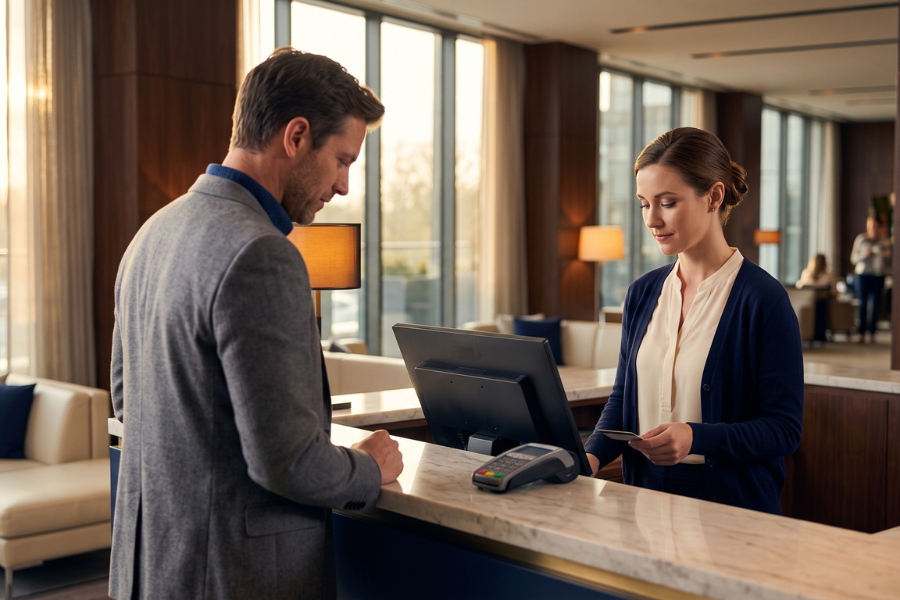
A well-built hotel guest communication platform uses that window to do more than confirm arrival times. AI-driven upsell prompts room upgrades, early check-in, dining packages, and spa credits can be surfaced automatically at exactly the point a guest is most receptive, rather than left to the front desk agent remembering to mention it during a busy check-in period.
Then there’s the advance-booking mechanic itself. Book a service now and pay less than you would on the day. It’s a simple structure, but it works both ways. The guest feels like they’re getting a deal by committing early. The hotel converts an uncertain, in-the-moment sale into guaranteed spend it can already see coming.

Reframing the Business Case for Owners and Investors
This is where the numbers should change the conversation, not just the tone of it. For many hotels, the upsell revenue generated in that pre-arrival window alone covers the annual platform cost within 30 to 90 days.
Once that threshold is crossed, the rest of the year isn’t a break-even wait; it’s margin. And that changes what kind of spend this is. A tool justified purely on labour savings reads as opex, a cost to be trimmed wherever possible. A tool that generates a measurable return is an asset that earns its keep and then some. That’s a very different conversation to have with an owner or an investment committee, and it’s the one hotels should be having.
What This Looks Like in Practice
The mechanics behind this aren’t complicated, but they do need to be built properly. Hotel guest communication needs to be timed to the booking journey rather than sent on a fixed schedule, integrated with the property management system so offers reflect real room and rate availability, and matched to guest profile data so the upgrade being offered is actually relevant to that guest.

This isn’t theoretical. Crowne Plaza Perth‘s experience with AI guest communication is a useful proof point closer to home, the property cut manual pre-arrival admin by 40% and saw its Tripadvisor review volume nearly double, evidence that automated, well-timed hotel guest communication changes outcomes, not just workload. At InterContinental Sydney Coogee Beach, they manage more than 8,000 guest interactions each month through Canary’s AI Guest Messaging platform, enabling guests to connect with the hotel more effortlessly while supporting front office teams with greater efficiency and responsiveness.
Platforms purpose-built for hospitality, like Canary, are increasingly being delivered in the Australian market because generic messaging tools weren’t designed with a hotel’s booking and upsell logic in mind. It’s less about any one vendor and more about recognising that the category has matured well past “answering guest questions faster.” However, that is still a critical requirement as well which the AI messaging component excels at.
The bottom line
Hotel guest communication platforms shouldn’t be measured against the labour costs they trim. That’s the smallest part of the story. The real measure is the revenue currently being left on the table in the pre-arrival window, revenue most hotels aren’t tracking because they were never taught to look for it there.

Need help considering or selecting the best technology for your Hotel and guests? Technology 4 Hotels can save you time and hassle, and help you increase your revenue. If you have feedback on this article or would like to connect, please get in touch via phone +61 2 8317 4000, or book a time for a complimentary 15-minute Tech Chat, just click here.
Frequently Asked Questions
A: Labour savings are real but modest, usually just a few reclaimed hours a week. On its own, that figure rarely justifies meaningful investment and puts the platform in competition with cheaper tools solving the same narrow admin problem. Upsell revenue generated in the pre-arrival window is a far larger and more direct measure of value.
A: Guests in the pre-arrival window have already committed to the stay and are actively anticipating it, browsing rather than rushing past a front desk queue. It’s one of the few points in the guest journey where they’re genuinely receptive to offers like room upgrades, early check-in, or dining packages.
A: Guests are offered a lower price for booking a service ahead of arrival compared to purchasing it on the day. This benefits both sides, guests feel like they’re getting a deal by committing early, and hotels convert an uncertain, in-the-moment sale into guaranteed spend they can see coming well before the guest arrives.
A: No. Workload reduction is still a genuine benefit, it just shouldn’t be the headline. When upsell revenue is the primary line item in the business case, workload reduction becomes a welcome bonus rather than the entire pitch.
A: Three things in combination, messaging timed to the booking journey rather than sent on a fixed schedule, integration with the property management system so offers reflect real availability, and guest profile matching so upgrades offered are actually relevant to that guest.