

Why Most Hotels Are Sitting on Data They Can’t Actually Use
There’s a version of hospitality every GM and owner aspires to: one where a hotel customer data platform quietly powers everything. The front desk that recognises a returning guest by name, the campaign that lands because it’s actually relevant, or the revenue manager who spots a high-value segment before a slow quarter hits.
Here’s the uncomfortable truth: your hotel probably has more guest data than you think. Not only that, without a hotel customer data platform, that’s where it stays. To be specific, it’s just scattered. Booking history sits in the PMS, engagement data in the marketing platform, survey responses somewhere else, as well as spa and F&B spending in their own systems. Each one holds a fragment of the same guest. Yet none of them tells the whole story.
That gap, between the data you have and the data you can actually use, is clearly where the real cost shows up.
Where the Cost Actually Hides
Fragmented guest data isn’t just an inconvenience. Also, it’s a quiet, compounding drain on revenue, and it shows up in three specific ways.

What suffers first? Guest experience. Consider this: a guest who’s stayed four times in 6 months walks up to check in and gets treated like a stranger. That’s not a training gap. It’s a data gap. After all, the information existed somewhere in your systems. It simply never reached the person who needed it, at the moment they needed.
Marketing gets expensive and imprecise. Without a single, reliable view of who your guests are, campaigns default to broad strokes. As a result, everyone gets the same offer, regardless of relevance. Conversion suffers, and the budget gets spent reaching people who were never going to respond.
OTA dependency compounds. This is the one that should concern owners and investors most. A guest who books through an OTA gives you almost no usable data: no email, no preferences, no way to recognise them as the loyal repeat guest they might be. So next time they’re ready to book, you have no way to reach them directly. They go back to the OTA. You pay the commission again. A cycle that reinforces itself, stay after stay.
The Golden Profile
Customer Data Platforms (CDP) solve this kind of problem. Strip away the jargon, and a CDP is simply a unification layer: it connects the systems you already run (PMS, booking engine, CRM, point-of-sale, surveys) and builds one continuously updated record per guest. The industry shorthand for this is a “Golden Profile,” a single, reliable source of truth that merges booking history, contact details, preferences, and spend into a coherent picture of who someone actually is. In other words, one reliable view of every guest, built from everything you already know.
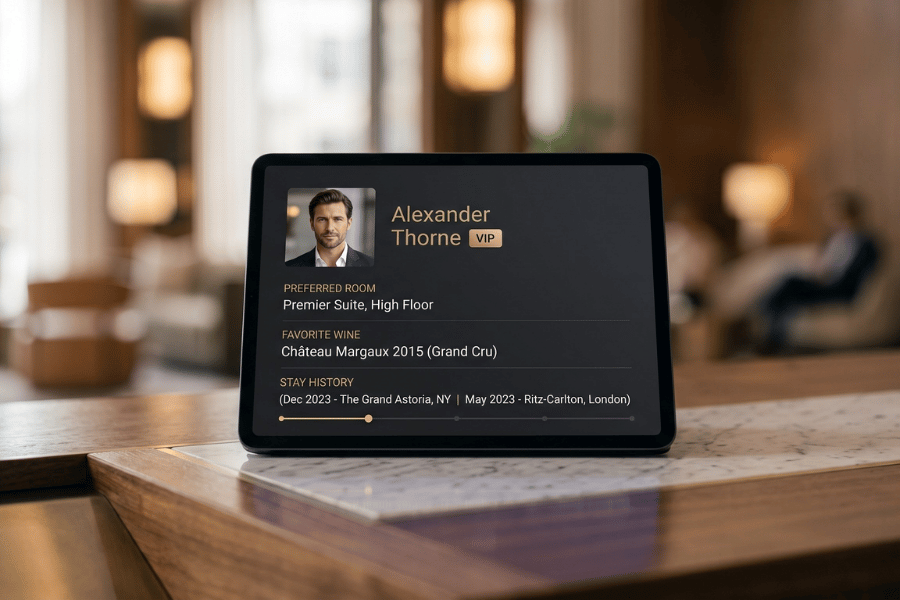
What that unlocks, in practical terms:
It identifies your real high-value guests, not just the ones booking your most expensive rooms, but the ones who spend on dining, book the spa, respond to upsells, and return year after year. Ownership groups are often surprised by who their actual VIPs turn out to be.
It turns personalisation into a system rather than a coincidence. A guest who consistently books the executive floor and orders room service on day two, receiving a tailored upgrade offer, isn’t luck. It’s a Golden Profile doing exactly what it’s meant to do.
And it directly counters OTA dependency. A CDP can surface guests who are loyal in behaviour but still booking through third parties, flagging them for direct outreach. Furthermore, every guest who shifts channel is a commission saved, and across a property or portfolio, that adds up fast.
The AI Connection
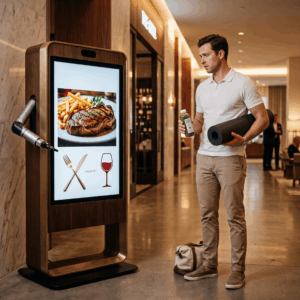
A lot of hotels have piloted AI tools over the past year or two with underwhelming results: a recommendation engine suggesting a family suite to a solo business traveller, a chatbot that doesn’t recognise a guest who’s already emailed three times. The instinct is to blame the AI. The actual problem is almost always the data underneath it.
AI in hospitality is only as good as what it’s trained on. Furthermore, fragmented or incomplete guest records produce exactly the kind of generic, occasionally embarrassing output that erodes trust in the technology. Fortunately, a CDP fixes that foundation.
When guest profiles are clean and complete (stay history, preferences, sentiment), AI tools can finally do what they’re promised to do: predict accurately, personalise in real time, surface the right offer at the right moment.
Ultimately, the technology was never the bottleneck. In fact, the data was, and still is for most hotels.
What Changes for a GM vs. an Owner
For a GM, this shows up operationally. Campaigns become segment-driven instead of one-size-fits-all. The front desk has context before a guest even arrives. Service recovery moves faster because complaint history is visible, not buried in a separate system.

For an owner or investor, the impact is financial. For instance, more direct bookings mean lower distribution costs. Additionally, better-targeted guest engagement means higher lifetime value per guest. Cleaner data supports sharper pricing decisions.
In addition, for anyone managing a portfolio, a CDP offers something genuinely hard to build any other way: a consolidated guest view across every property, not just one.
The Right Time to Think About Hotel Customer Data Platforms
It’s tempting to treat a CDP as one more piece of technology competing for budget in an already crowded stack. In fact, that’s the wrong frame. A CDP isn’t layered on top of your existing tools. It’s what makes them work better. Your PMS, your CRM, your marketing platform, your AI tools all perform better when they draw from one reliable source of guest truth instead of operating in isolation.

The hotels investing in this now are building something competitors can’t easily copy, such as an owned, first-party dataset that compounds with every stay. Every direct booking enriches it. Every returning guest deepens it. As a result, the gap between hotels that have this and hotels that don’t isn’t staying flat. It’s widening.
So the real question isn’t whether a CDP makes sense for your property. On the contrary, it’s what the current approach is already costing you: in commissions paid twice, in personalisation that never happens, in guests who quietly went back to the OTA because nobody reached out first.
That number is almost certainly higher than it looks.
Need help considering or selecting the best technology for your Hotel and guests? Technology 4 Hotels can save you time and hassle, and help you increase your revenue. Finally, if you have feedback on this article or would like to connect, please get in touch via phone +61 2 8317 4000, or book a time for a complimentary 15-minute Tech Chat, just click here.
Frequently Asked Questions
A: A CRM stores guest contact details and booking history for your team to reference. A CDP goes further and, clearly, it pulls data from every system you run (PMS, booking engine, CRM, POS, surveys) and unifies it into one continuously updated guest profile, then makes that profile usable across marketing, personalisation, and AI tools.
A: No. A CDP connects to the systems already in place rather than replacing them. It sits as a unification layer on top of your PMS, CRM, and other tools, so existing workflows stay intact while the data behind them becomes far more useful.
A: Yes. While OTA bookings don’t share full guest data upfront, a CDP can still identify guests who are loyal in behaviour but currently booking through third parties, and flag them for direct outreach on their next stay.
A: Most properties see early signals, like cleaner segmentation and more targeted campaigns, within the first few months. The bigger financial gains, particularly the shift from OTA-dependent to direct bookings, build steadily over time as the guest dataset grows richer with each stay.
A: No. Single properties benefit just as much from unifying fragmented guest data, though portfolio owners get an additional advantage: a consolidated guest view across every property, which is difficult to achieve any other way.