
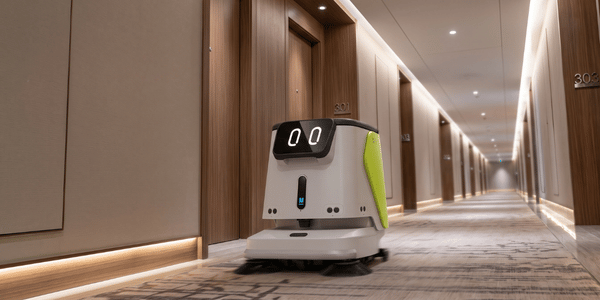
How Technology Supports People Rather Than Replaces Them
Every conversation about hotel technology eventually arrives at the same question: will this replace the people doing the work? With housekeeping, that question gets asked more often than most, because housekeeping remains one of the most physically demanding and reputation-critical departments any hotel runs. Our view, after years of watching technology enter this space, is that the question itself is wrong. The real conversation should not be people versus technology. It should be people enabled by technology. Get that distinction right, and the rest of the decisions become far easier.
Housekeeping is still fundamentally human
Housekeepers shape a guest’s first impression of a room and, by extension, their impression of the hotel. That work depends on judgement: knowing which scuff needs attention, which room needs a second pass, how a space should feel rather than simply look clean on a checklist. No piece of technology available today can replace that judgement, and none is trying to. What technology can do is remove everything standing between a housekeeper and that higher-value work: the repetitive tasks, the physical strain, the administrative overhead that eats into a shift without improving a single room.
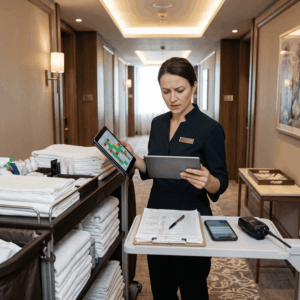
The challenge is complexity, not a lack of technology
Most housekeeping teams are not short on technology options. They are short on time, staff and straightforward processes. Guest expectations keep rising. Labour availability remains tight. Every department wants faster turnaround and better communication with fewer people to deliver it. Technology only earns its place when it addresses one of those pressures directly. Buying a system because it looks impressive, or because a competitor has one, solves none of them.

“The best fix for complexity is usually simpler than hotels expect. Connect what you already have and clarify who owns what, and most of the pressure eases before a single new system gets added. It’s rarely the exciting answer, but it’s almost always the right one.”
Brendon Granger,
Chief Experience Officer of Technology 4 Hotels
Robot ROI, and what it actually looks like
Robotics is where this plays out most visibly, and it is worth being honest about the numbers. General managers often go into a robotics conversation expecting dramatic, immediate savings, sometimes six figures a year. That expectation rarely survives contact with the real cost of running a robot well. A cleaning robot might lease for a modest daily rate on paper, but once servicing and maintenance are properly accounted for, the realistic daily cost runs meaningfully higher. That gap needs to be part of any business case from the outset, not discovered a year in.
Where the investment does pay off is in the qualitative outcomes. Housekeepers freed from repetitive floor work can spend that time on the detail that actually shapes a guest’s experience: skirting boards, scuffs, the finishing touches a checklist never quite captures. There is a safety dividend too, particularly around strenuous, repetitive tasks like mopping large public areas, and a wellbeing dividend in simply removing the most mundane parts of the job.
Will robots replace housekeeping staff?
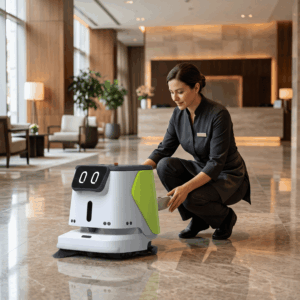
It is worth answering this directly rather than letting it sit unaddressed. A cleaning robot still needs someone responsible for it day-to-day: emptying it, clearing blockages, knowing when something needs attention before it becomes a bigger problem, alongside a proper servicing arrangement behind the scenes. None of that looks like headcount reduction. It looks like a different kind of role, one focused on oversight and quality rather than repetition. Robotics in housekeeping works best as robot plus person, with the person doing the work that actually requires a person.
Start with the workflow, not the technology
None of this works if the technology is chosen before the problem is understood. The questions that matter are simple: what problem are we solving, who does it affect, how will we measure success, does it fit into how the team already works, and will people actually use it day to day. That last point about integration deserves more attention than it usually gets. A robot without a maintenance plan and a clear owner is not a solution. It is another piece of equipment sitting unused in a storeroom within six months.
“Every property we’ve worked with that got robotics right started with their team, not their technology. Ask what’s taking your best people away from guests, then look at what you can take off their plate. Get that order wrong and you end up with expensive equipment nobody wants to use.”
Craig Coughlin,
Chief Experience Officer of LUXXE Outsourced Hotel Services

Logistics robots: real promise, real limits
Cleaning robots are only part of the picture. Logistics robots, designed to pull linen and supply trolleys around a property, show real promise for reducing physical strain on staff, and a recent trial made that case well. They also show how much success depends on the building itself. Wide corridors and low ramp gradients matter more than most hotels expect, and in one trial the robot was unable to manage a ramp while pulling a heavily loaded linen trolley. That is not a reason to dismiss the technology. It is a reminder that the building and the technology have to be assessed together, and a solution proven in one property will not automatically work in another.
The future housekeeper
The future housekeeper will likely spend less time on repetitive physical tasks, more time interacting with supporting technology, and more time on quality control and the details that shape a guest’s stay. Done well, that makes the role more sustainable and more attractive to the people who might otherwise leave it. The hotels that get the most out of this shift will not be the ones that adopt the most technology. They will be the ones that combine genuine operational expertise with thoughtful, well-integrated investment: great people, smart processes and the right technology, applied in that order.
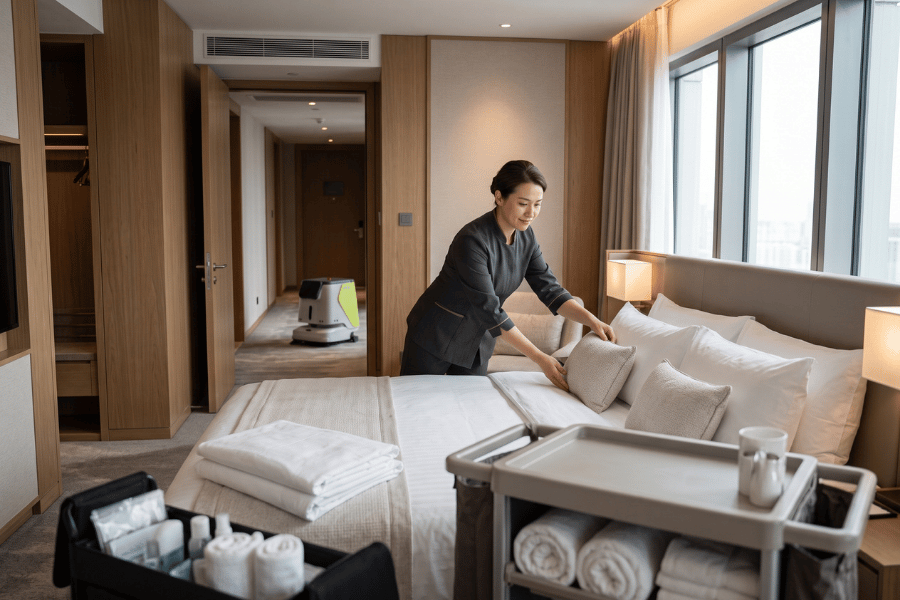
Looking to improve how your housekeeping team operates? LUXXE can help you take a closer look at what’s working, where time is being lost and what could be done better.
And if you’re considering new technology but aren’t sure where to start, Technology4Hotels can help you explore your options and work out what’s right for your property.
If you have feedback on this article or would like to connect, please get in touch via phone +61 2 8317 4000, or book a time for a complimentary 15-minute Tech Chat, just click here.
Frequently Asked Questions
A: No. A cleaning or logistics robot still needs a person responsible for it day to day, emptying it, clearing blockages and flagging issues, alongside a proper servicing arrangement behind the scenes. The technology changes the shape of the role rather than removing it.
A: More than the lease price alone suggests. Servicing and maintenance need to be built into the true daily cost from the outset, or the business case will look better on paper than it does in practice.
A: In taking on repetitive, physically demanding tasks such as floor cleaning in large public areas. That frees housekeepers to focus on the detail work that actually shapes a guest’s impression of a room, and reduces the physical strain associated with the most repetitive parts of the job.
A: No. Robots can handle repetition and reduce physical load, but they cannot assess room quality, spot the details a checklist misses, or deliver the service culture guests notice. That remains a human responsibility.
A: LUXXE can help review current housekeeping operations and identify where technology would make the biggest difference. Technology4Hotels can provide an independent evaluation of the technology options themselves.