

In a world of smartphones, apps, and AI chatbots, the humble in-room telephone might seem like a relic. But for hotel owners and general managers, removing it could be one of the most expensive mistakes you make — in more ways than one.
The question isn’t whether guests use the in-room phone the way they used to. They don’t — and that’s not the point. The real question is: what does your hotel lose when it’s not there? The answer covers three things that every hotelier should care deeply about: revenue, safety, and liability.
The Revenue Case: Hotel Guest Room Phones Still Drive Incremental Spend
The in-room phone is one of the most underrated revenue tools in your property. When a guest wants room service, extra towels, or a dinner reservation, the phone is the path of least resistance. One tap of a clearly labelled button is faster than unlocking a smartphone, searching for a number, and dialling — and that friction matters.
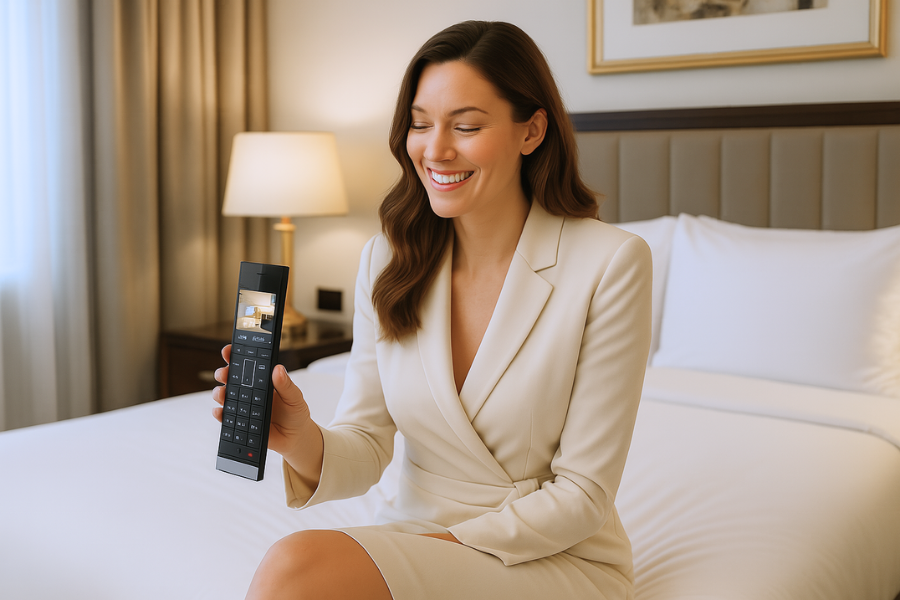
Hotels that have removed in-room phones frequently report a drop in room service orders, housekeeping requests, and ancillary spend. Guests simply don’t bother. The phone removes the mental effort of initiating a request, and that convenience translates directly to your bottom line.
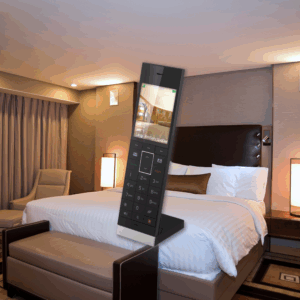
Modern IP-based phones take this further. Today’s models can feature LCD and touchscreen displays that double as a mini digital compendium — showcasing spa promotions, dining specials, and room upgrades right at the bedside, without requiring guests to download an app or pick up a tablet. Every upsell opportunity that appears on that screen is one your guest didn’t have to go looking for.
Don’t just take our word for it. Based on internal usage data shared by one of Australia’s leading PABX providers, the numbers tell a compelling story.
In a 200-room property running at 80% occupancy, we’re seeing approximately 2,000 minutes of internal call traffic per month — meaning more than 4 in 10 guests are still picking up that handset to engage with hotel staff.
In resort environments, that figure more than doubles, with over 83% of guests using the in-room phone during their stay. The ‘phones are dead’ narrative only holds true for external dialling. For internal service delivery — room service, housekeeping, front desk — the phone remains the primary touchpoint between your guests and your team.
Safety and Liability: This One Is Non-Negotiable
No matter how tech-forward your property is, a fixed in-room phone is your safety backstop. A guest’s mobile phone can be dead, locked, left in the car, or simply out of range. In a genuine emergency — a medical episode, a fire, a security threat — a guest room phone is always on, always charged, and always connected to your front desk or emergency services.
Many hotel brands and jurisdictions continue to mandate fixed-line phones in guest rooms as part of compliance requirements and brand standards. Beyond meeting those obligations, consider the liability exposure of removing them. If something goes wrong in a room without a phone, and a guest couldn’t reach help in time, the legal and reputational consequences could far outweigh whatever you saved on maintenance.

One hotel general manager learned this the hard way. He’d been considering removing in-room phones altogether when a PABX card failure left a third of his rooms without phones for two weeks. What followed was a flood of guests walking to reception for every minor request — missing towels, broken TVs, noise complaints — turning small irritations into heated confrontations. He spent more on complimentary bottles of wine trying to smooth things over than the phone system would have cost to run for a year. The phones went back in.

Not Every Guest Lives on Their Smartphone
It’s easy to assume every guest is mobile-first. They’re not. Elderly guests, travellers with accessibility needs, and guests unfamiliar with your hotel’s app all rely on the in-room phone as their default communication channel. It’s intuitive, it requires no setup, and it works for everyone — regardless of tech literacy.
International travellers are another consideration. While eSIMs and affordable international data plans have made roaming far less painful than they once were, a significant proportion of guests — particularly from markets with less flexible carrier options — still prefer not to rely on their mobile phones for hotel communication. The in-room phone removes that concern entirely.
Modern Phones Are Built for the Modern Room
One objection that comes up in renovations is space. Nightstands are getting smaller — a trend driven by both design aesthetics and the reality that guests now place their own devices on every surface. Phone manufacturers have taken note. Newer models are increasingly compact, with slimmer footprints designed to sit neatly alongside a charging pad and a bedside lamp without dominating the space.

Beyond size, today’s hotel phones are a far cry from the beige handsets of the nineties. Sleek, branded, and highly customisable, they’re designed to complement contemporary room aesthetics — not fight them. Whether your property leans minimalist or boutique-luxe, there’s a model that fits.
And for properties looking to maximise every touchpoint, newer phone models can be integrated with AI-powered answering capabilities — ensuring calls are always picked up, requests are logged, and guests never reach a dead end, even during peak hours or overnight when staffing is lean. It’s a small integration that quietly eliminates a common guest frustration.
The Bottom Line
The case for guest room phones in 2026 and beyond isn’t nostalgia — it’s just practical. They protect your guests in emergencies, protect your hotel from liability, and quietly generate revenue that disappears the moment they’re gone. They serve guests who don’t want to rely on their own devices, and they give your property a reliable, always-on communication channel that no app can fully replicate.
The technology has evolved. The phones are sleeker, smarter, and more space-conscious than ever. The question isn’t whether you can afford to keep them — it’s whether you can afford not to.
Need help considering or selecting the best technology for your Hotel and guests? Technology 4 Hotels can save you time and hassle, and help you increase your revenue. If you have feedback on this article or would like to connect, please get in touch via phone +61 2 8317 4000, or book a time for a complimentary 15-minute Tech Chat, just click here.
Frequently Asked Questions
A: Yes — and more than ever. Beyond guest convenience, in-room phones are often required by hotel brand standards and local compliance regulations. They also serve as a critical safety backstop in emergencies when a guest’s mobile phone is unavailable, dead, or out of signal.
A: Absolutely. In-room phones directly drive incremental revenue through room service orders, housekeeping requests, and upsell opportunities — revenue that quietly disappears when the phone does.
A: Many do — and that’s fine. But not all guests are mobile-first. Elderly guests, accessibility-needs travellers, and international visitors who’d rather avoid roaming charges all rely on the in-room phone. It’s a universal fallback that works for everyone, no app download required.
A: Yes. Today’s hotel phones go far beyond basic calling. Models with LCD and touchscreen displays can showcase room service menus, spa promotions, and upgrade offers. Newer systems can also integrate with AI-powered answering, ensuring no guest call goes unanswered — even overnight or during peak periods.
A: Usage has changed, but the value hasn’t. Guests may not make long-distance calls from the room phone anymore, but they still use it to order room service, request housekeeping, and reach the front desk quickly. That one-touch convenience drives incremental spend that simply doesn’t happen when guests have to fumble with their own device. And in an emergency, it could be the only communication tool that works.