
Long-time readers know my style: measured, calm, and pragmatic. This manifesto is different. It is urgent, passionate, and unvarnished because the stakes have never been higher. Historically, the hospitality industry waits to adopt technology until it’s too late. We cannot afford to lag behind this time. If we do not embrace AI immediately, we are handing an insurmountable advantage to the OTAs. This isn’t just a trend; it is the battleground for our future independence. I’m writing this with fire because I refuse to watch our industry get left behind again.

You think AI is a hype bubble? You think you can wait until 2027? By then, the game won’t just be over; the rules will be written in a language your hotel doesn’t even speak. Hospitality has reached its most dangerous moment in decades. Not because demand is disappearing. Not because travellers no longer value service. But because the industry is standing still, while the rules of commerce, discovery, and decision-making are being rewritten around it.
2026 is the inflexion point where AI stops being a chatbot on your website and starts becoming the infrastructure of the global economy.
This is not another technology cycle. It is a structural shift.
And 2026 is the line in the sand.
THE ENEMY: The “Static Hotel” (Or How to Go Bankrupt Slowly)
The “old way” is the Disconnected Hotel. It is running a property on human-managed friction and reactive panic. This model is expensive, slow, and increasingly uncompetitive.
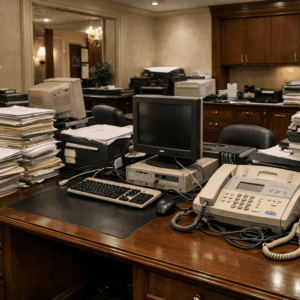
- The Buyer is No Longer Human: The enemy is the belief that a website is a digital brochure for human eyes. AI agents are now acting on behalf of travellers; they don’t browse, they don’t scroll, and they don’t respond to brand storytelling.
- Digital Ghosting: If your website isn’t machine-readable, you are invisible. You are digitally ghosted.
- Reactive Pricing: It’s looking at yesterday’s pickup report to decide today’s rate. While your revenue manager is sleeping, AI agents are negotiating rates and analysing micro-demand signals thousands of times a day.
- Wasted Humanity: If your staff are doing robotic work—typing in passport details and answering routine questions—you are wasting their humanity. You are fighting a war with a fax machine.
The uncomfortable truth is that much of the industry is still optimising for yesterday’s customer journey — human-led search — while tomorrow’s bookings are already happening machine-to-machine. And by the time the warning signs are undeniable, the gap is already too wide.
THE SHIFT: The “Anticipatory Engine” (Outcomes, Not Features)
Stop looking at AI as a “tool” or a “feature.” The Shift is toward Predictive Hospitality. We are moving from “Generative AI” (which writes text) to “Agentic AI” (which takes action).
- Operational Clairvoyance: The hotel knows the guest’s flight is delayed before the guest lands, automatically adjusts their check-in, and orders a late-night snack—all without a human lifting a finger.
- The Invisible Concierge: The more invisible the tech becomes, the more human the experience feels. Guests won’t notice the system; they will notice that everything works.
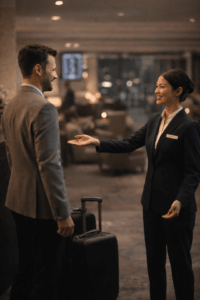
- Re-humanisation: We use AI to handle the logistics so humans can handle the emotions. Staff stop being task processors; they become hosts.
THE PREDICTION: December 2026
By the end of 2026, the industry will have split—not by brand size, but by mindset.
The Hotel That Ignored This (The Sceptic)
Your occupancy is down, but you don’t know why because your traditional SEO reports look fine. You don’t realise that millions of bookings are happening machine-to-machine on AI platforms where you are underrepresented or absent altogether. Your margins are being eaten alive by OTAs, and your staff are burnt out, drowning in manual tasks your competitors automated two years ago.
The Hotel That Adopted It (The Augmented Hotelier)
Your hotel runs on a “hybrid” model where the back-office is 50% automated. Your website is a beacon for AI agents, pulling in direct bookings without commission. Your staff are happier because they are experience creators. The guest walks in, and the coffee is ready because the system knew they were coming. It feels like magic, but it’s just good data.
THE ACTION PLAN: What Must Happen Now
We cannot wait for 2027. There is no advantage in waiting for certainty. We must act now on three fronts:
- The Friction Audit: Ruthlessly identify where staff struggle and guests complain. If a task is repetitive, manual, and high-volume, it must be automated.
- Clean Instruction Data: We must build the Semantic Layer. If our amenities, pricing, and inventory aren’t clear to a machine, they cannot be sold by an AI agent.
- Integrate, Don’t Replace: We are not ripping out the heart of the hotel. We are creating a single source of truth across existing systems (PMS, CRM) to allow intelligence to flow.
The future of hospitality will not arrive with a headline feature or a new gadget at the front desk. It will arrive quietly. Guests won’t notice the system, but they will notice that everything works.
Hospitality will not die—but the version of it we’ve been defending might. What replaces it is faster, calmer, and more human.
Let’s drink to that. And then let’s get to work
Need help considering or selecting the best technology for your Hotel and guests? Technology 4 Hotels can save you time and hassle, and help you increase your revenue. If you have feedback on this article or would like to connect, please get in touch via phone +61 2 8317 4000, or book a time for a complimentary 15-minute Tech Chat, just click here.
Frequently Asked Questions
A:
The Invisible Concierge refers to the use of AI and automation to handle operational, administrative, and decision-making tasks in the background, allowing hotel staff to focus on human interaction and guest experience. Guests don’t see the technology; they simply experience smoother, more personalised service.
A:
2026 is the point where AI moves from experimentation to infrastructure. AI agents are already influencing how travellers search, compare, and book hotels. By 2026, hotels that are not optimised for machine-led discovery and decision-making risk becoming invisible in key booking channels.
A:
AI is shifting bookings from human-led search to machine-to-machine transactions. Traveller AI agents evaluate structured data, pricing logic, and availability in real time. Hotels that rely solely on traditional SEO or OTAs without preparing their data for AI risk losing direct demand and margin.
A:
The Static Hotel is a property that operates reactively, with disconnected systems, manual workflows, and pricing decisions based on historical data. This model struggles to compete in an environment where speed, anticipation, and automation increasingly define performance.
A:
No. The purpose of AI in hospitality is to remove repetitive, low-value tasks from staff workloads. By automating logistics and administration, hotels can re-humanise service, allowing staff to focus on empathy, problem-solving, and guest relationships.