
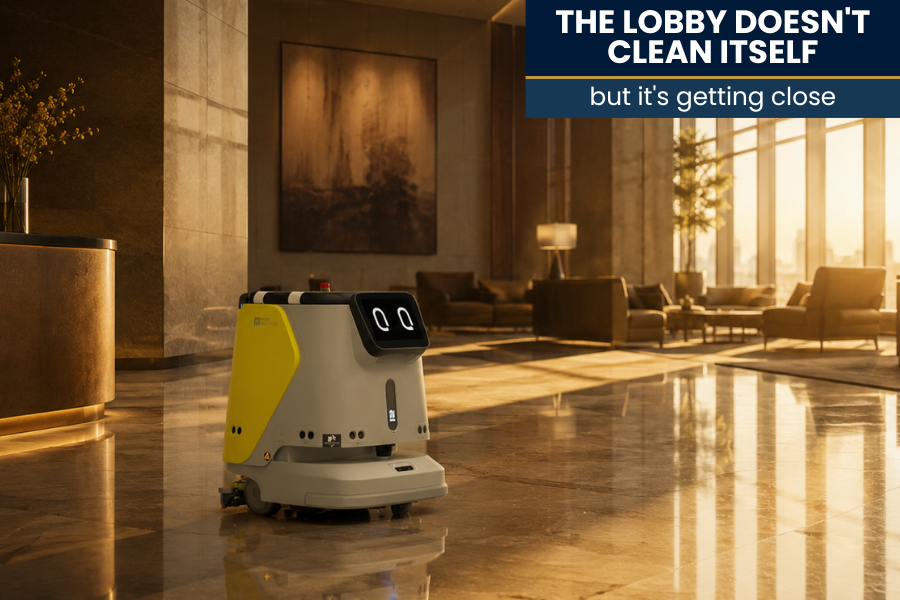
Every capital decision in a hotel comes with a version of the same question: what’s the return, and when do we see it? “Innovation” is a fine aspiration, but it doesn’t hold up in a budget meeting. So when the conversation turns to robots — specifically, the hotel cleaning robots now operating in lobbies, corridors, and function spaces across APAC, the right question isn’t “is this the future?”
It’s “Does this make financial sense for my property, right now?”
The answer, based on real deployments at properties in the region, is more compelling than most owners and GMs expect.
The Comparison Most Hotels Get Wrong
The instinct when evaluating a $30,000 hotel cleaning robot is to measure it against doing nothing. That’s the wrong benchmark.
The right comparison is the robot’s cost versus the current labour cost of performing the same task. In Australia and New Zealand, a full-time cleaner can cost upwards of $50,000 per year in base salary alone — before you factor in superannuation, leave entitlements, and the management overhead that comes with every additional headcount. Even a casual engagement, once rostered consistently, adds up quickly.
A commercial cleaning robot, by contrast, operates at roughly AUD $26 per day. It doesn’t accrue leave or superannuation, and it doesn’t call in sick on a Friday morning.
The caveat worth stating honestly: a robot doesn’t replace a full-time employee one-for-one. What it does is absorb a significant block of hours — typically the most repetitive, physically demanding hours — that currently sit on someone’s payroll. That redirection of labour is where the financial case is built.
What the Numbers Look Like in Practice
Two recent deployments in the region illustrate this clearly.
At a 5-star Adelaide hotel with over 300 rooms and 15 floors, a single robot was deployed to handle carpet vacuuming in guest corridors and meeting rooms, as well as scrubbing in the lobby. The property had been managing the challenge of cable-length limitations with traditional vacuums and a persistent labour shortage. The robot resolved both. With staff wages running at $35 per hour and the robot saving approximately three hours of labour per day, the daily saving works out to $105, or just over $3,150 per month. Against a $30,000 capital outlay, the robot reached breakeven in under 10 months.
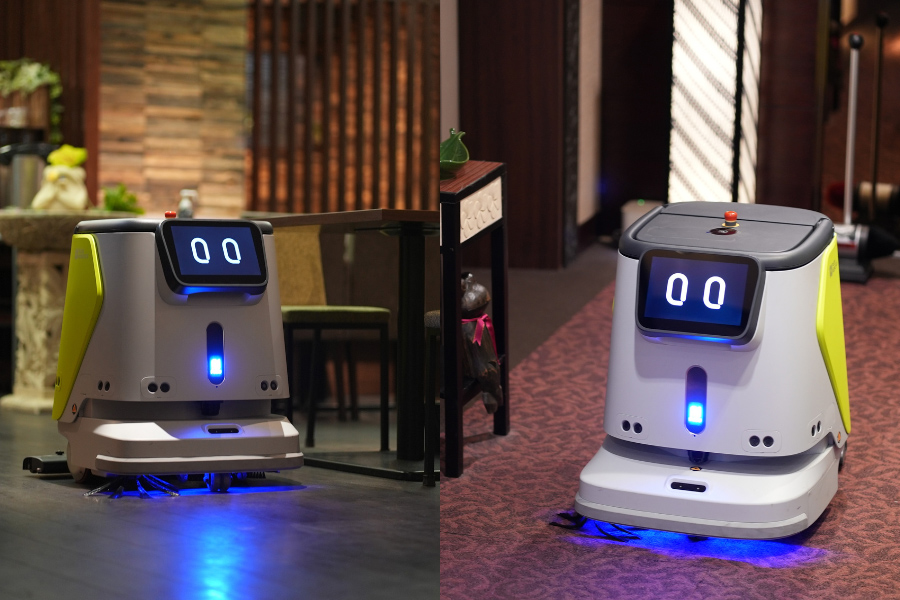
At a 4-star New Zealand property with 192 rooms across 9 floors, the context was slightly different: not enough staff to meet cleaning demand, and a high cost attached to bringing on additional cleaners. One robot was deployed to cover more than 1,100 square metres of floor per day across carpeted corridors, event rooms, restaurant and lobby areas. The calculation here was even starker: the annual salary of a full-time cleaner versus the $30,000 robot cost. Breakeven arrived in just over seven months.
In both cases: one robot, one property, measurable output, and a payback period well under a year.
What Happens After Breakeven
The ROI conversation tends to focus on the payback period — understandably, since that’s where capital risk lives. But the more interesting question for owners is what happens after the robot has paid for itself.
The savings don’t stop. The operational output doesn’t diminish. And some of the less quantifiable benefits start to compound in ways that matter.
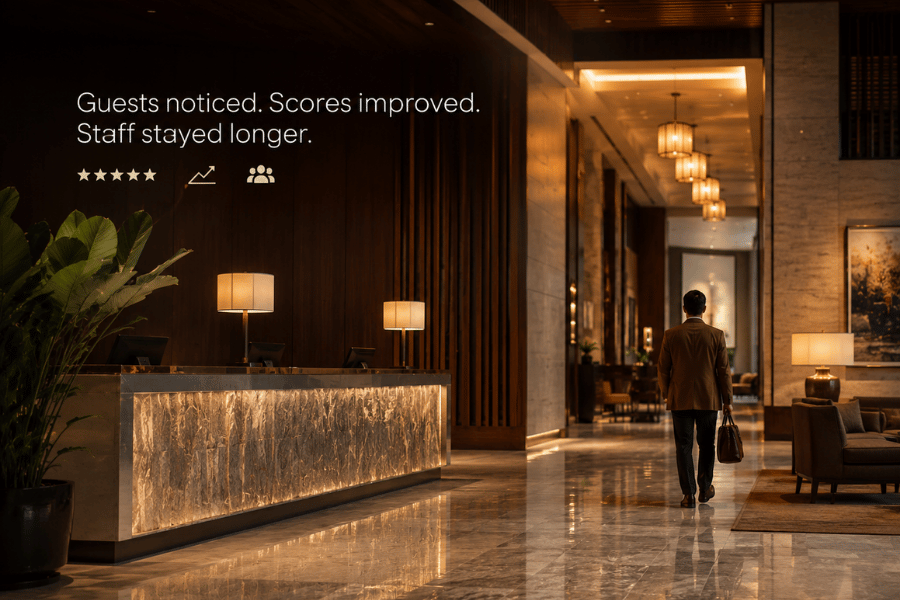
Guest experience is one. A housekeeping manager at a mid-market Perth hotel described the before-and-after plainly: prior to the robot, two staff members were required to manage public areas, and floors regularly appeared dirty and discoloured. After deployment, one staff member handles the same area — with the other redirected to detailed cleaning and guest laundry — and the results are visible. Guests began commenting that the lobby, restaurant, and corridor floors looked spotless. That kind of feedback shows up in review scores, and review scores show up in rate integrity and occupancy.
Staff retention is another. Teams that are freed from the most physically grinding parts of their role tend to stay longer. Turnover in housekeeping is expensive — recruitment, onboarding, and the quiet cost of inconsistent standards during a new hire’s early weeks. A housekeeping manager at a large Melbourne city hotel noted that:
The robot effectively removes the most time-consuming tasks from the public area attendants’ list, giving the team more capacity to focus on what they’re actually good at. That’s not a trivial benefit.”
There’s also a brand signal worth considering. Properties that deploy this technology thoughtfully are communicating something to guests — that standards are maintained by design, not just by effort.
PUDU Robotics, a brand partner of Technology 4 Hotels, has now deployed over 53,000 robots globally, including at properties operated by some of the world’s most recognised hotel brands. The technology is no longer experimental. It’s operational.
The Question Worth Sitting With
For owners and GMs weighing this decision, the financial case is now well-established. The payback timelines are measured in months. The ongoing savings are real. The operational and reputational upside is documented.
The harder question, the one that doesn’t appear in an ROI spreadsheet, is what does the cost of not acting look like as labour costs continue to rise, cleaning standards remain under pressure, and the gap between properties that have modernised their operations and those that haven’t becomes more visible.
That’s the question that owners of the properties mentioned above had already answered before they signed the purchase order.
Need help considering or selecting the best technology for your Hotel and guests? Technology 4 Hotels can save you time and hassle, and help you increase your revenue. If you have feedback on this article or would like to connect, please get in touch via phone +61 2 8317 4000, or book a time for a complimentary 15-minute Tech Chat, just click here.
Frequently Asked Questions
A: Yes, and this is one of the more common assumptions worth clearing up. Modern commercial cleaning robots aren’t limited to a single surface. PUDU Robotics’ CC1, for example, handles both carpet vacuuming and hard floor scrubbing within the same deployment — switching application depending on the area. Properties with a mix of carpeted corridors, tiled lobbies, and timber restaurant floors are running a single robot across all of them. You don’t need a different machine for each surface.
A: More than most GMs expect. In active hotel deployments in Australia and New Zealand, a single robot is covering between 978 and 1,169 square metres of floor per day — that’s corridors, lobbies, event spaces, and restaurant areas combined. Cleaning efficiency typically sits around 476–480 square metres per hour. For context, that’s the equivalent of a staff member cleaning continuously, without breaks, for the better part of a morning shift — every single day.
A: It’s less about reducing headcount and more about changing how your team spends their time. The most common outcome reported by housekeeping managers is that staff previously assigned to floor cleaning are redirected to tasks that actually require a human — detailed room cleaning, guest laundry, responding to requests. At one mid-market Perth hotel, the robot reduced the floor cleaning team from two staff to one, with the second staff member redeployed rather than removed. The result was better coverage across both tasks, not fewer people doing the same work.
A: Minimal time. The robots are designed with operational simplicity in mind, the learning curve for housekeeping staff is low, and most teams are comfortable running the robot independently within the first few days. A housekeeping manager at a Perth hotel described it plainly: the robot is easy to use and quickly became part of the regular cleaning routine without disruption to existing workflows. Setup and mapping of the cleaning area takes a little longer initially, but that’s a one-time process.
A: Based on current deployments in the region, between seven and ten months, depending on your labour costs and how many hours per day the robot is running. At a wage rate of $35 per hour and three hours of daily labour saved, the daily saving is $105, which puts breakeven at under ten months. At higher labour costs or longer daily run times, that timeline shortens. For owners evaluating this as a capital line item, it’s worth noting that once the robot has paid for itself, the savings continue indefinitely — against an asset that doesn’t require leave, super, or overtime.