

The Power of Tech Lies in Personalisation
The past few years have seen some truly innovative hotel ideas that have made it possible to transform guest experiences. From smart rooms and contactless check-in to QR code assisted services and virtual reality tours, these innovations push the hotel industry into the future. And it just keeps accelerating, as reported in this article on hotel technology trends, as well as this one.
Below, we’ll run through some of the most forward-thinking, innovative ideas for hotel business on the market that can help transform the guest experience in 2024 and beyond.
1. Smart Rooms: Enhancing Guest Comfort
Most guest rooms will look good and feature all hotel amenities for a pleasant stay. But these days, there’s more to guest comfort than what they can see and feel. What guests can do in their hotel rooms counts, too. Forward-thinking hotels can put their guests in control of their own comfort in a fun and engaging way. When incorporating smart technology into their rooms, think devices that allow guests to control the room’s lighting, temperature, or curtains.
Rather than picking a standardised guest experience, hotels can utilise smart room technology to put their guests in control.
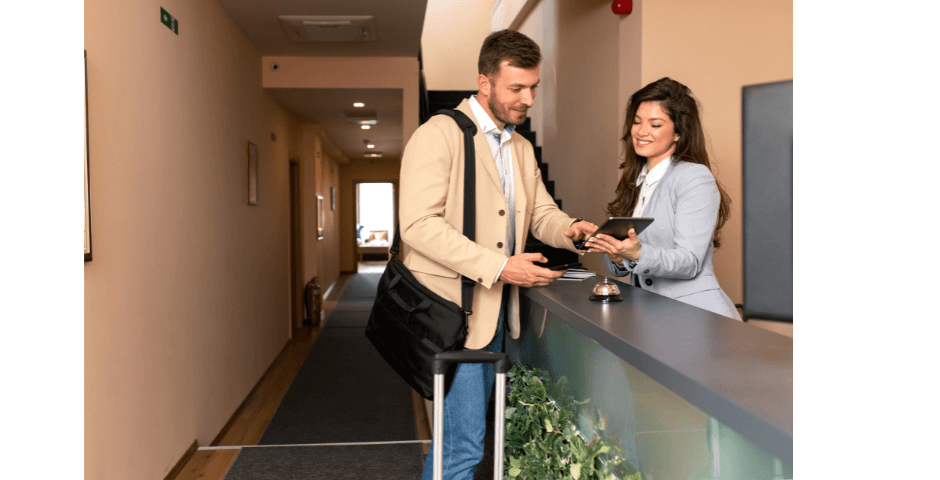
2. Contactless Check-in: Simplifying the Arrival Process
Contactless check-in is a win-win process. It benefits guests — 73% say that they prefer hotels that offer pre-arrival contactless check-in. It also benefits the hotel team, who spend less time guiding arriving guests through the check-in process. This gives them more time to do value-adding tasks. It’s one of the leading innovative ideas for hotel front desks.
Anyone who’s arrived at a hotel after a long journey will understand the convenience of contactless check-in. Guests want to unwind in a state-of-the-art hotel room, not deal with a lengthy check-in process. Pre-arrival check-in systems and smart check-in kiosks allow guests to check in their preferred way. They also allow hotel staff to receive all-important guest data electronically streamlining their back-of-house operations.
3. Transform Guest Experiences: Tailor Every Stay
There’s overlap between all hotel guests, but there are more differences than similarities. Each guest is unique and has their own preferences. In the past, hotels had limited options in offering a customised experience, applying a more blanket service more or less, to everyone who passed through the hotel’s front doors.
But hotel technology has changed that. Nowadays, hotels have the capability to deliver personalised experiences, tailoring stays to meet individual guest preferences. The integration of Internet of Things (IOT) products, including in-room virtual assistant devices and programmable room infrastructure like smart thermostats, smart lighting systems, and Smart TVs, empowers guests by putting them in control of their experience.
4. Virtual Reality: Immersive Hotel Tours
Hotel pictures can say a thousand words. But an immersive, virtual reality tour of a hotel will say a lot more. Putting together VR tours of a hotel can bring a whole host of benefits for the guests both before and during their stay. Even after, if they want to relive their experience, VR can continue to connect a guest to the hotel. An immersive hotel tour can provide the final nudge a guest needs to click that ‘make a reservation’ button, as well as give them a solid understanding of what to expect when they finally arrive. VR is another tool that can help to transform guest experiences.
5. QR Codes: A seamless and contactless experience
Part of the transformative innovation trends in hospitality are the QR code-based compendiums and food ordering systems. By using QR codes, hotels empower guests to access comprehensive compendiums and seamlessly place orders directly from their personal devices, encouraging a contactless and convenient experience.
This technology not only enhances efficiency for both guests and staff but also aligns with the contemporary trend towards digital integration in hospitality, ultimately elevating the overall guest experience.
6. Sustainable Solutions: Eco-friendly Initiatives
It’s clear that hotels need to transition to more intelligent energy solutions. The recent surge in electricity costs over the past few months has amplified the financial burden on hotel energy expenses, which are a substantial component of overall operational costs. Additionally, as guests are showing a growing preference for eco-friendly accommodations, reducing energy consumption not only benefits the planet but also aligns with evolving consumer preferences.
Tools such as ECOSYSTEM can help to reduce energy costs and boost a hotel’s eco-friendly credentials. Add in smart HVAC control in the hands of the guests, and energy consumption will be well under control.
7. Future Possibilities: Robot-Driven Hospitality
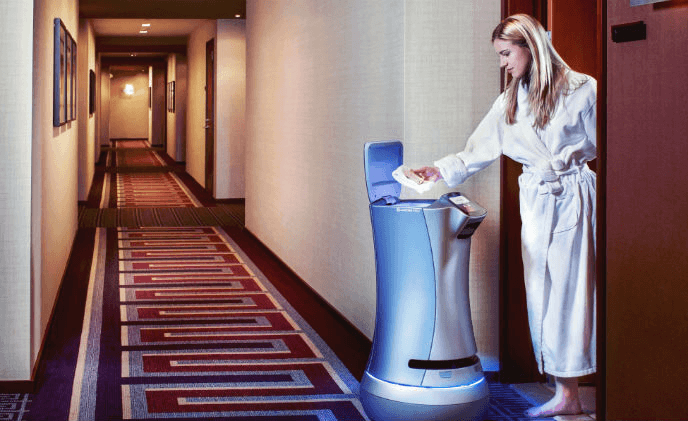
In some environments, the rise of the machines sounds — and often looks — intimidating. But in the hotel industry, robots help to transform guest experiences. Guests of all ages love interacting with futuristic-yet-cute robots, and they help hotel staff by taking over the more mundane labour tasks so they can focus on enhancing guest interaction where it matters .
It’s likely that we’ll see robots playing a prominent role in the hospitality sector in the years to come, but they’re already being deployed in mid-range and high-end hotels. The most common uses for hospitality robots include:
⦁ Butler Robots that deliver housekeeping supplies and room service directly to guests.
⦁ Food Service Robots that work behind the scenes assisting kitchen staff or delivering plates to diners.
⦁ Cleaning Robots that vacuum and polish the hotel’s corridors, lobbies, and function rooms.
8. Augmented Reality: Interactive Guest Services
Though deployment is still in its earliest stages, augmented reality technology has already shown a lot of promise for elevating the guest experience. This advanced, futuristic tool can be used to bring the hotel’s vital information to life. While FAQ, safety, and hotel information cards can be informative, they’re not all that exciting; Particularly beneficial in large hotels, AR can dynamically guide guests to their rooms or places of interest, introducing a new level of interactivity to the overall experience.
9. Advanced Security: Ensuring Guest Safety
Above all, guests should feel safe and secure in a hotel. Modern technologies can help to enhance a hotel’s safety credentials, as well as elevate a guest’s comfort. For instance, keyless entry systems can give guests peace of mind that only authorised individuals are on site. Security robots that prowl the hotel premises can also reassure guests that they’re safe even when there’s no employee in sight.
Need help considering or selecting the best technology for your Hotel and guests? Technology 4 Hotels can save you time and hassle, and help you increase your revenue. If you have feedback on this article or would like to connect, please get in touch via phone +61 2 8317 4000, or book a time for a complimentary 15-minute Tech Chat. Please click here.
Frequently Asked Questions
A:
Smart rooms allow guests to control lighting, temperature, and other settings through connected devices, offering a personalised and convenient experience that enhances overall comfort during their stay.
A:
Contactless check-in simplifies the arrival process, reduces wait times, and minimises physical interaction, making it a preferred option for 73% of hotel guests, while also allowing staff to focus on value-adding tasks.
A:
Hotels can use IoT devices and AI to collect and analyse guest data, enabling them to offer tailored recommendations and personalised services based on individual preferences and past behaviours.
A:
Virtual reality provides immersive hotel tours, helping potential guests make informed booking decisions and enhancing their pre-arrival experience by giving them a realistic preview of the hotel’s amenities and rooms.
A:
QR codes enable contactless access to hotel compendiums, food ordering systems, and other services, providing a seamless and convenient experience for guests while streamlining hotel operations.